

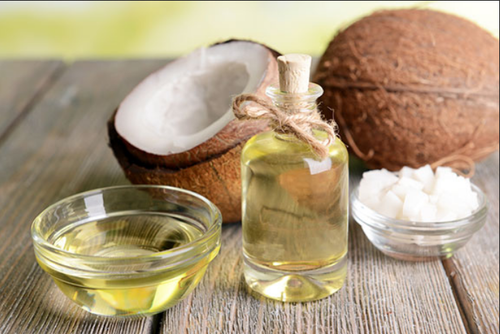
Coconut essential oil is a common search, but the health sources we checked treat coconut oil as a carrier oil, not an essential oil. Cleveland Clinic lists it as a base oil used to dilute essential oils. It can also moisturize skin, but it can clog pores on the face.
Last updated 3 October 2026. This article gathers guidance from Cleveland Clinic and the American Academy of Dermatology (AAD). It reports what those sources say and does not replace advice from your own doctor.
Is there such a thing as coconut essential oil?
Cleveland Clinic defines essential oils as concentrated plant extracts. Its list of eleven popular essential oils includes lavender, tea tree, frankincense and peppermint, and coconut is not one of them.
Instead, the same page names coconut oil as an example of a carrier oil. It describes a carrier oil as a base or vegetable oil that helps dilute essential oils. So when a recipe says “coconut essential oil,” it most likely means plain coconut oil. Check the label to see what a product really contains.
Our page on carrier oils for skin explains the difference in more detail.
What do people use coconut oil for?
Cleveland Clinic’s article on coconut oil for skin lists a few simple uses:
- Body moisturizer. Apply it after a shower, focusing on dry areas such as elbows, knees, hands and feet.
- Makeup remover. Use a small amount with cotton, then follow with a gentle water-based cleanser.
- Lip balm. Apply as needed to dry lips.
The article says coconut oil’s main appeal is moisture. It says coconut oil can decrease transepidermal water loss, which is the amount of water that evaporates from the skin.
Can coconut oil help eczema or dry skin?
Cleveland Clinic’s eczema home-remedy article quotes a dermatologist who says coconut oil can reduce dryness and itchiness. The article says it will not clear eczema, but it can relieve symptoms.
The AAD gives a different first choice for dry skin. Its pick is a fragrance-free ointment or cream, not a lotion, put on right after bathing while the skin is still damp. If dryness lasts after you follow its tips, the AAD says it may point to an underlying condition and a dermatologist should look at it.
Who should keep coconut oil off the face?
Cleveland Clinic says it is generally not recommended on your face because it is highly comedogenic. In plain words, it can clog pores. The article says this can cause breakouts and may increase blackheads and whiteheads. It also mentions milia, which are tiny white or yellow bumps from clogged pores.
It says people prone to acne or with oily skin should avoid it, and that people prone to acne should avoid putting it on their shoulders, chest or back. It adds that clogged pores and breakouts are more likely on oilier skin.
For other oil choices for dry skin, see body oil for dry skin and our coconut oil for skin guide.
How do you patch test coconut oil?
The AAD’s steps apply to any product you have not used before:
- Rub your typical amount onto one small patch, for example the underside of the arm or the crook of the elbow.
- Do it twice daily across a seven-to-ten-day stretch.
- If skin reacts, wash the product away gently and do not use it again.
After a reaction, the AAD says soothing options include a cool compress or petroleum jelly. A severe reaction that lingers despite home care may need a dermatologist.
Is it safe to mix coconut oil with essential oils?
Cleveland Clinic recommends diluting essential oils in a carrier oil (coconut and jojoba are its examples) in almost every case, to avoid skin irritation. NCCIH says allergic reactions and skin irritation may occur with essential oils, and citrus oils may cause sun sensitivity.
We do not list mixing recipes or amounts, because the sources we used give none. If you want the background on strong oils, read anti-aging essential oils.
When should you see a doctor?
Talk to a dermatologist if you are unsure about your skin type, as Cleveland Clinic suggests. The AAD says to see one if dry skin lasts after you follow its tips, or if a reaction to a product is severe. NCCIH says that if you use a complementary approach for a sleep problem, you should tell your health care providers.
Frequently asked questions
Is coconut oil classed as an essential oil?
No. Cleveland Clinic describes essential oils as concentrated plant extracts, and it names coconut oil as a carrier oil used to dilute them. Cleveland Clinic’s list of eleven popular essential oils does not include coconut. If a label says “coconut essential oil,” check the ingredient list to see what it really contains.
Is it okay to put coconut oil on my face?
Generally not. Cleveland Clinic says it is not recommended on the face because it is highly comedogenic and can cause breakouts. It says people prone to acne or with oily skin should avoid it. If you want to try it anyway, do a patch test first and ask a dermatologist.
Does coconut oil suit dry body skin?
It can be used there. Cleveland Clinic suggests applying it after a shower to dry areas such as the elbows, knees, hands and feet. The AAD’s own pick for dry skin is still an ointment or cream. Choose what suits your skin, and see a doctor if dryness does not improve.
Can coconut oil treat eczema?
A Cleveland Clinic dermatologist says coconut oil will not clear eczema, but it can relieve symptoms such as dryness and itching. The NHS advises moisturizing at least twice a day and seeing a GP if treatments are not helping. The AAD’s dry-skin page says to see a dermatologist if dryness continues after its tips. Do not swap it for medicine your doctor has prescribed.
Sources (all checked 3 October 2026)
- Cleveland Clinic, Is Coconut Oil Good For Your Skin?, dated 29 December 2022.
- Cleveland Clinic, 11 Essential Oils: Their Benefits and How To Use Them, dated 14 December 2021.
- Cleveland Clinic, Stop the Itch: Home Remedies To Help Manage Eczema, dated 9 February 2024.
- American Academy of Dermatology, Dermatologists’ top tips for relieving dry skin, updated 2 January 2026.
- American Academy of Dermatology, How to test skin care products, dated 10 August 2021.
- American Academy of Dermatology, Eczema: Tips to help your child feel better, page date not shown.
- NHS, Atopic eczema: treatment, reviewed 6 September 2024.
- NCCIH, Sleep disorders and complementary health approaches, May 2024 (essential oil safety passage).
- NCCIH, Aromatherapy, last updated January 2020.
Written by the Dry Skin Tips editorial team. We do not claim medical review of this article. If you have a skin concern, see a qualified health professional.