

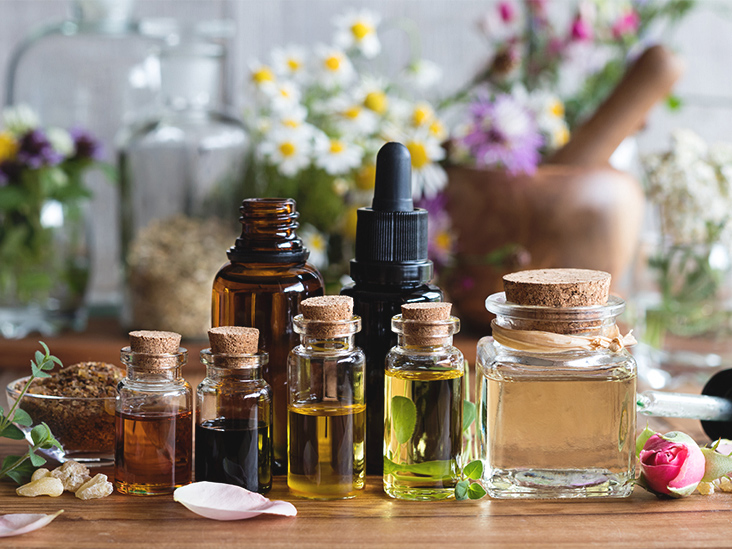
“Essential body oils” can mean two things: plant essential oils, or oils you smooth over the body to soften dry skin. They are not the same. Cleveland Clinic warns that essential oils can irritate skin. For very dry skin, the American Academy of Dermatology (AAD) says thick creams and ointments tend to work better than oils.
Last updated 3 October 2026. This article summarizes guidance from Cleveland Clinic and the American Academy of Dermatology. It describes what those groups publish and does not replace advice from your own doctor.
What are essential body oils?
The phrase has no medical definition in the sources we checked. People use it for plant essential oils and also for body oils sold as moisturizers.
Which of the essential body oils you mean changes the advice. We cover both below.
Is it safe to put essential oils on your body?
Cleveland Clinic says essential oils may irritate the skin, and can cause contact dermatitis when used on damaged skin. It also says they can strip skin of its natural oils, leaving it dry, tight and flaky. That is the opposite of what dry skin needs.
It adds that essential oils are not regulated by the Food and Drug Administration (FDA), so you cannot be sure a product meets basic quality or safety standards. For more detail, see our guide to essential oils in skin care recipes.
Do body oils help dry skin?
Some do, with limits. Cleveland Clinic calls olive oil a great moisturizer option for dry or sensitive skin. Another Cleveland Clinic page says coconut oil can help decrease transepidermal water loss, which is water evaporating from the skin.
But the AAD says that for dry skin, butters and oils tend to liquefy on the skin, so they are less effective than an ointment such as petroleum jelly or a thick cream. For ideas, see our pages on body oil for dry skin and the best body oil for dry skin.
How do you apply a body oil?
Cleveland Clinic says the best time to apply olive oil is right after a shower, while skin is damp. Use a small amount. Its dermatologist says your skin should feel smooth, not tacky.
The AAD gives the same timing for moisturizers in general: apply while skin is still damp after a bath or shower. It also suggests keeping baths and showers to five to ten minutes of warm, not hot, water.
Which body areas need extra care?
Cleveland Clinic says people prone to acne should avoid coconut oil on the face, shoulders, chest and back. It says coconut oil can cause blackheads, whiteheads and milia, which are tiny white or yellow bumps.
It also notes that olive oil offers no sun protection factor (SPF). If oiled skin will be in the sun, sunscreen is still needed.
Should you patch test essential body oils?
Yes, it is a sensible step for any of the essential body oils you try. Cleveland Clinic suggests trying olive oil first on a small dry area, such as heels or elbows, then moving to other body parts if you are happy with the result. The AAD gives similar caution for new facial masks: try them on a small patch of skin first. It also says to pick products labeled fragrance-free, rather than “unscented.”
When should you see a doctor?
The AAD says a board-certified dermatologist is the person to see if dryness continues after its tips. It also says conditions such as eczema, ichthyosis or psoriasis can cause very dry skin that is easy to mistake for simple dryness.
In its mask advice, the AAD also recommends a board-certified dermatologist when skin feels worse after a product. Stop using the product first.
Frequently asked questions
Can I use essential oils as a body moisturizer?
The sources we checked do not support that. Cleveland Clinic says essential oils can irritate skin and strip its natural oils, leaving it dry, tight and flaky. The AAD adds that essential oils can be too strong to put straight on the skin. A cream or ointment without fragrance is the safer pick, and a doctor can advise if you still want to try an essential oil.
Is body oil better than lotion for dry skin?
Not according to our sources. The AAD says creams and ointments tend to work better than lotions, while butters and oils liquefy on the skin. It points to petroleum jelly or a thick cream instead. Oils can still feel pleasant, but our sources do not rank them above creams. See our page on body lotion for dry skin.
When should I put oil on my skin?
Cleveland Clinic says the best time is right after a shower, when skin is damp, in a small amount. The AAD also says to apply moisturizer while skin is still damp. Its dermatologist says skin should feel smooth, not tacky, so start with a small amount.
Do body oils protect me from the sun?
No. Cleveland Clinic points out that olive oil has no sun protection factor. It warns that without sunscreen, sunburn and skin cancer risks are a concern. Use sunscreen on skin that will be in the sun, even when you also use an oil.
Sources (all checked 3 October 2026)
-
Cleveland Clinic, Essential Oils and Allergies: What the Science Says, dated 12 June 2026.
-
Cleveland Clinic, How Olive Oil Benefits Your Skin, dated 6 May 2025.
-
Cleveland Clinic, Is Coconut Oil Good For Your Skin?, dated 29 December 2022.
-
American Academy of Dermatology, Dry skin remedies for darker skin tones, updated 4 November 2022.
-
American Academy of Dermatology, Dermatologists’ top tips for relieving dry skin, updated 2 January 2026.
-
American Academy of Dermatology, Do facial masks work, and should I add one to my skin care routine?, updated 3 March 2026.
Written by the Dry Skin Tips editorial team. We do not claim medical review of this article. If you have a skin concern, see a qualified health professional.