

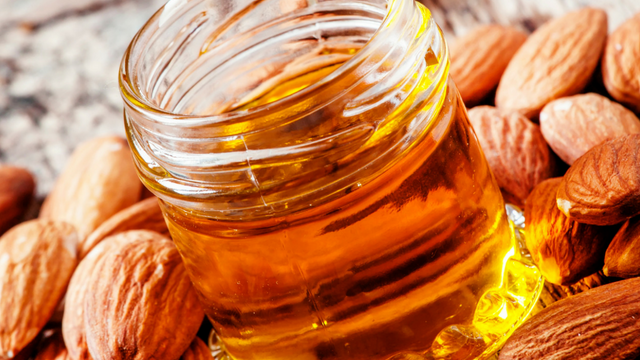
Sweet almond oil for hair is usually used in small amounts on the mid-lengths and ends, left on for a short time, then washed out. Cleveland Clinic describes this kind of hair oiling as a weekly routine. Try any oil on one small spot of skin beforehand, and leave it out if you have a nut allergy.
Last updated 3 October 2026. This article draws on guidance published by Cleveland Clinic, the American Academy of Dermatology and a medical journal review. It is a summary, not a stand-in for your own doctor’s advice.
Before you start: is it safe for you?
Almonds count as tree nuts. Cleveland Clinic’s tree nut allergy page names them among the common ones and describes reactions such as hives, rash, itching, and swelling of the face, lips, mouth or tongue. Severe symptoms call for 911 or the emergency room right away. Eating nuts is the page’s main concern. Merely touching tree nuts might cause a rash but should not set off a severe reaction, it says, and almond oil goes unmentioned, so ask a doctor first.
Natural does not mean allergy-proof. Cleveland Clinic points out that allergies can develop even to oils that come from nature.
How do you patch test sweet almond oil for hair and skin?
For any new skin product, Cleveland Clinic recommends testing on a small area of clean, dry skin. The inner elbow works well because the skin there is sensitive. Repeat on that spot for seven to 10 days. Since a rash may take several days to show, one hour is too soon to judge.
If a reaction appears, stop using the oil, and see a health professional should it linger or get worse.
How do people use sweet almond oil for hair?
Cleveland Clinic’s hair oiling guide lists almond oil among natural oil options and describes this weekly routine:
- Detangle with a brush first.
- Start with an amount about the size of a pea.
- Work it through with your fingers from the mid-lengths down to the ends.
- Let it stay in for 20 minutes up to an hour.
- Shampoo it out well.
Its page on olive oil for hair offers similar advice. Begin with a few drops and focus on the mid-lengths and ends, because extra oil can leave hair greasy.
Should you put almond oil on your scalp?
Dermatologists quoted by Cleveland Clinic urge caution with scalp oiling, which may make seborrheic dermatitis (dandruff) more likely. Anyone who gets dandruff easily should stay away from oils, they say. The clinic’s olive oil page adds that yeasts on the skin may feed on olive oil left on the scalp and worsen some scalp conditions. It does not say this about almond oil. If you want to try an oil anyway, keep it on the ends.
What does sweet almond oil for hair actually do?
In a 2022 review in the International Journal of Trichology, the authors say almond oil may make hair more elastic by filling spaces between cuticle cells, yet it does not lower protein loss because it stays out of the hair shaft. They also caution that hair oil evidence is limited, and overblown claims are common.
Oils can add moisture and shine and hide split ends for a while, says Cleveland Clinic, which calls that a cosmetic effect, not a permanent fix. It also cites research suggesting that almond oil’s moisturizing properties may create a barrier against UV rays, which is a possibility only.
Fine or oily hair may feel weighed down. A dermatologist quoted by Cleveland Clinic says dry, coarse, tightly curled hair is more likely to gain from oiling.
Can you use almond oil on skin the same way?
Our almond oil for skin page goes into this further. Here is what the sources say. A 2010 review calls almond oil an emollient with a history of use on dry skin conditions. Its claims about smoother skin or fewer scars rest on anecdotal evidence and need more study.
For dry skin, the American Academy of Dermatology (AAD) prefers ointments or creams to lotions. Jojoba oil, glycerin, hyaluronic acid, petrolatum and shea butter are among the ingredients it names, and almond oil is not. It also suggests moisturizing several times a day, especially while skin is still damp after bathing.
Our overview of sweet almond oil benefits covers the evidence in more detail, and you can compare other oils in carrier oils for hair or jojoba oil for hair.
When should you see a doctor?
A rash after using a product is worth a professional look, Cleveland Clinic says, if it:
- worsens or comes back repeatedly,
- hangs on past three weeks,
- spreads to the eyes or mouth, or
- gets in the way of sleep or focus.
If dry skin continues after you follow the AAD’s tips, it advises seeing a board-certified dermatologist, since a condition such as atopic dermatitis, psoriasis or kidney disease may be behind it. Swelling of the face or tongue, trouble breathing or feeling faint needs emergency care.
Frequently asked questions
How long should sweet almond oil stay in my hair?
About 20 minutes to an hour, based on Cleveland Clinic’s hair oiling routine, which uses a pea-sized amount and a weekly schedule. It lists almond oil as one option and gives no separate time for it. Shampoo it out afterward, and use less if your hair feels heavy.
Can I leave sweet almond oil in overnight?
The sources do not address it. Cleveland Clinic’s hair oiling page says oils can be washed out after several hours, and its olive oil page mentions olive oil as an overnight treatment, but neither one covers almond oil overnight. Its weekly routine says 20 minutes to an hour, followed by washing. It also warns that oils can weigh down fine hair and that scalp oiling may worsen some scalp conditions. Ask a dermatologist before leaving oil on longer.
Does sweet almond oil for hair stop hair fall?
No, the sources do not say so. The 2022 review says almond oil does not reduce protein loss in hair, and Cleveland Clinic describes the gains as moisture, shine and a cosmetic cover for split ends. A doctor or dermatologist is the person to see about thinning or hair loss.
Is sweet almond oil safe for everyone?
No. Almonds are tree nuts, and Cleveland Clinic says an allergy can involve any tree nut. Its allergy page is mainly about food, so ask a doctor if you have a nut allergy. Even without one, test a small area first, since natural oils can still cause skin allergies.
Sources (all checked 3 October 2026)
- Cleveland Clinic, Hair Oiling: 3 Benefits and How To Do It, published 31 August 2022.
- Cleveland Clinic, Is Olive Oil Good for Your Hair?, published 21 August 2026.
- Cleveland Clinic, Tree Nut Allergy, updated 21 July 2025.
- Cleveland Clinic, Are You Actually Allergic to Your Skin Care Products?, published 5 May 2023.
- Mysore V, Arghya A., Hair Oils: Indigenous Knowledge Revisited, International Journal of Trichology, 2022.
- The uses and properties of almond oil, Complementary Therapies in Clinical Practice, 2010.
- American Academy of Dermatology, Dermatologists’ top tips for relieving dry skin, updated 2 January 2026.
Written by the Dry Skin Tips editorial team. We do not claim medical review of this article. If you have a skin concern, see a qualified health professional.