

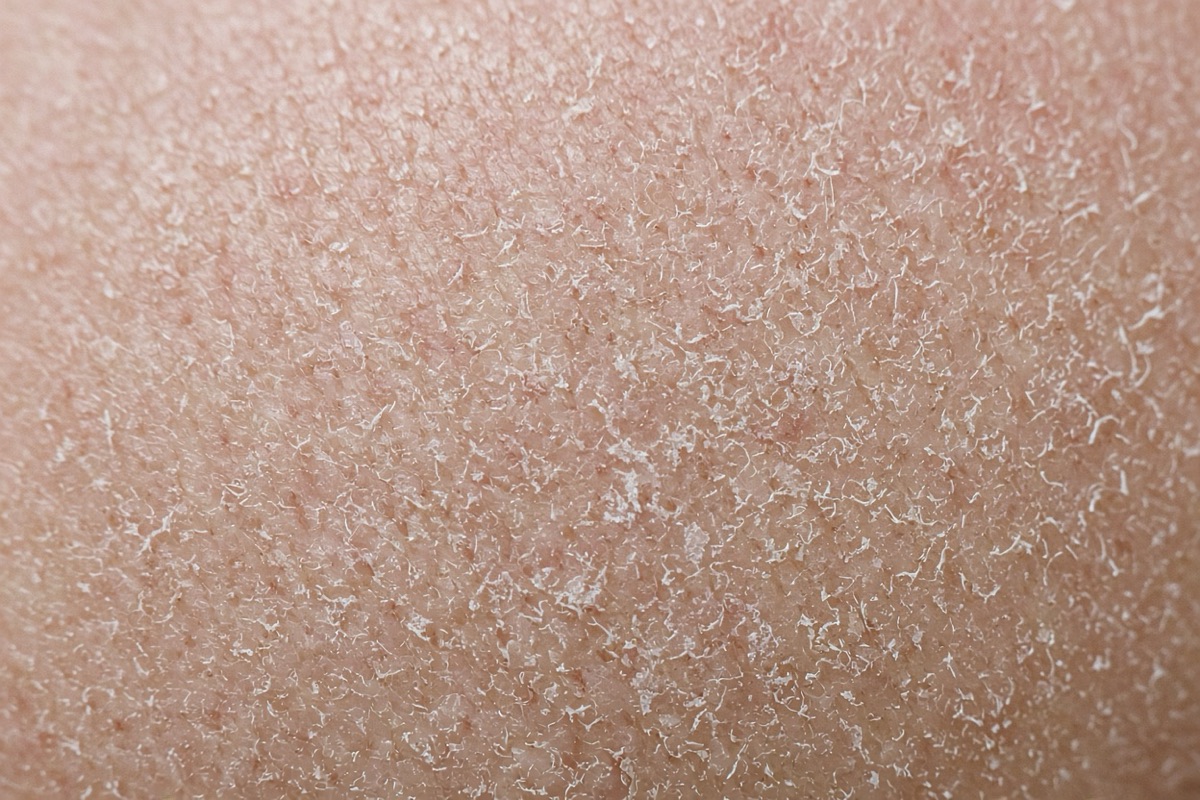
Dry flaky skin on face usually appears when the skin loses water faster than it can replace it, so the outer layer tightens and lifts into small flakes. The American Academy of Dermatology (AAD) ties this to hot water, harsh cleansers and cold air. Some skin conditions look the same. Here are seven common causes and what may help.
Why does my face get dry and flaky?
Your skin works like a barrier. Natural oils help it hold water in, and when those oils are stripped away or the air pulls moisture out, the surface starts to feel rough, tight or itchy. At its worst, the AAD cautions, very dry skin may flake, itch, crack, and sometimes bleed.
The face is a special case. The NHS points out that the hands and face are exposed to the elements more than any other part of the body. That is one reason dry flaky skin on face shows up so often when the weather turns, even in people who never have dryness anywhere else.
This guide stays on the face itself, meaning areas such as the cheeks, forehead, eyelids, nose and brows. If you want the full list of general triggers, read our guide on what causes dry skin. For a head-to-toe plan, see our skin care routine for dry skin.
Seven common triggers behind dry flaky skin on face
The first four triggers are everyday ones. The last three are skin conditions or reactions that a doctor should look at if they sound familiar.
1. Hot water and long washes
Long, hot showers are on the AAD’s list of everyday habits that dry the skin. Its advice is to keep showers and baths to roughly five to ten minutes in warm water. It also says to shut the bathroom door while you wash, because that can help the skin hold on to more moisture. Steaming hot water on the face may feel good, but it is a common reason for flaking, especially on tight cheeks.
2. Harsh soaps and strongly scented products
The AAD says deodorant soaps and harsh cleaners can strip away the natural oils and fats in the skin. The NHS agrees that ordinary soaps and shower gels tend to dry the skin out. If you wash your face with whatever bar is in the shower, this may be your culprit.
Watch the label, too. According to the AAD, “unscented” products can still contain chemicals that cover up odors, and these can bother dry, sensitive skin. It suggests looking for the words “fragrance-free.” Our page on the best face wash for dry skin explains what to check on a cleanser.
3. Cold, dry air and indoor heating
Cold air holds less moisture, and the AAD says research links low outdoor temperatures with very dry skin. Heating inside can dry the air further. The AAD suggests a humidifier, ideally one placed in the bedroom and running while you sleep, and says to clean it often to stop mold from growing.
4. Age
With age, the skin makes less sebum, the oil that keeps it soft. The AAD says the amount falls sharply by your 40s and keeps dropping after that. By 60, it adds, almost everyone has some dry skin. So if your dry, flaky skin is worse than it used to be, age may be part of the picture.
5. A reaction to something that touches the face
Contact dermatitis is a reaction to a substance on the skin. The NHS says it can leave skin itchy, dry and cracked, and that it most often affects the hands and face. Most cases come from irritants such as soaps, detergents and regular contact with water, while allergic reactions to things like cosmetics are less common. The NHS says it usually improves or clears once the trigger is found and avoided, so keep a note of anything new you started using before the flaking began.
6. Eczema
The NHS describes atopic eczema as skin that can be itchy, dry, cracked, crusty or scaly. It says the condition can appear in many places, and it is common on the face in babies and toddlers. The US National Institute of Arthritis and Musculoskeletal and Skin Diseases (NIAMS) notes that adults with atopic dermatitis may get a scaly rash on the skin around the eyes, and lists fragrances in skin products and soaps among possible triggers. Eczema needs a proper diagnosis, so do not guess.
7. Seborrheic dermatitis
According to the AAD, seborrheic dermatitis is a frequent cause of scaly rashes where skin is oily, including the scalp and the face. Besides the scalp, it can show up on the ears, eyebrows, beard or the skin around the nostrils. The scale is white to yellowish and can be dry or greasy. The AAD says it is often itchy and involves inflammation, which sets it apart from simple dandruff. If your flaking sits mostly in the brows, beard line or beside the nose, it is worth asking a dermatologist.
How can you tell everyday dryness from a skin condition?
You cannot be sure from looks alone, since many skin problems resemble each other. A few clues can help you decide whether dry flaky skin on face is worth a visit.
- Everyday dryness tends to improve once you soften the trigger, such as shorter washes, a gentler cleanser or a humidifier.
- Itchy, red or discolored patches that keep coming back may point to eczema or contact dermatitis, according to the NHS.
- Greasy or dry yellowish scale on the brows, ears or beside the nose is how the AAD describes seborrheic dermatitis.
- Redness across the cheeks and nose with dry skin and swelling around the eyes can fit rosacea, the NHS says. It also notes that rosacea can look like contact dermatitis or seborrhoeic dermatitis.
Skin tone changes how these look. The AAD says seborrheic dermatitis may appear red on lighter skin but pink, purple or lighter-colored on darker skin, and the NHS says redness can show as dark brown, purple or grey on darker skin in contact dermatitis.
How can you calm dry flaky skin on face at home?
If nothing above sounds like a medical condition, gentle care is the usual first step for dry flaky skin on face. These tips come from the AAD and the NHS, and none of them is a cure.
- Cut the heat. Use warm water and keep washes short. Pat your face dry with a clean towel instead of rubbing, since the AAD says rubbing can irritate very dry skin.
- Go easy on cleanser. The AAD says to use only enough to remove dirt and oil, without a thick lather.
- Moisturize on damp skin. The AAD advises applying moisturizer right after washing and again whenever skin feels dry, and gently massaging it in.
- Choose a cream or ointment. The AAD says these add more moisture than lotions. It lists glycerin, hyaluronic acid, petrolatum, shea butter and dimethicone among helpful ingredients.
- Smooth, don’t rub. The NHS says to spread emollients gently in the direction your hair grows, which helps keep hair follicles from clogging.
- Shield the face outside. Sunscreen should be broad-spectrum, water-resistant and SPF 30 or higher, per the AAD.
- Look after your lips. The AAD suggests lip balm or petroleum jelly, and a balm that does not sting or tingle.
One safety point from the NHS: emollients can catch fire, so keep them away from flames and cigarettes, including cloth that has touched them. Flaking around the nose has its own causes, so see our guide to dry skin around the nose.
Frequently asked questions
Why is my face still flaky after I moisturize?
The AAD says that when dryness continues after you follow its tips, you should see a board-certified dermatologist, because an underlying condition may be involved. Check, too, whether a product is the problem: fragrance or an irritating ingredient can keep the skin upset.
Is dry flaky skin on face a sign of eczema?
It can be, but it does not have to be. The NHS says atopic eczema can make skin dry, cracked and scaly, yet plain dry skin and other conditions can look similar. Telling them apart takes a doctor’s exam.
Why does dry flaky skin on face get worse in winter?
Colder outdoor air holds less moisture, and the AAD links that to very dry skin. Indoor heating and hot showers can add to it. A clean humidifier in the bedroom is one step the AAD suggests.
Why is the skin around my eyebrows flaky?
According to the AAD, seborrheic dermatitis can appear on the eyebrows, ears and skin around the nostrils. Eczema can also affect the skin around the eyes, NIAMS notes. A dermatologist can sort out which one it is.
Can age cause dry skin on face?
Yes. The AAD says skin makes less sebum as we get older, and by 60 almost everyone has some dry skin.
When should dry flaky skin on face be checked by a doctor?
See a board-certified dermatologist if dryness hangs on despite careful home care, the AAD advises. Without treatment, it says, an underlying condition can get worse. Scratching an itchy rash can also lead to infection.
The NHS says to talk to a GP, nurse or pharmacist if an emollient causes ongoing burning or stinging, a rash, or blocked, inflamed hair follicles. It also suggests seeing a GP for flaky, itchy patches on the face or elsewhere on the body, and for contact dermatitis that is persistent, keeps returning or is severe. With rosacea symptoms, the NHS says to book a GP visit, and to seek urgent help if you also have eye pain, blurred vision, light sensitivity, a red eye or a gritty feeling.
Treat this article as background reading, not a diagnosis. A doctor can find the real cause of your dry skin.
Sources: AAD, Dermatologists’ top tips for relieving dry skin; AAD, Seborrheic dermatitis; NHS, Emollients; NHS, Contact dermatitis. Also used: AAD dry skin causes, NHS atopic eczema, NHS rosacea, NHS dandruff, NIAMS atopic dermatitis. All checked 7 October 2026.