

Dry skin treatment usually starts at home with regular moisturizer, gentle washing and fewer irritants. The American Academy of Dermatology (AAD) says many people can heal dry skin this way. When it works, improvement tends to show within 2 weeks. If it lingers, a pharmacist or dermatologist can add more. Here are six steps.
What is the best dry skin treatment to start with?
The sources agree on the first move: put moisture back and stop whatever is drying the skin out. The NHS describes emollients as moisturizing treatments that cover the skin with a protective film to trap in water. People commonly reach for them when skin is dry, itchy or flaky.
If you are asking how to treat dry skin, think of treatment for dry skin as a ladder. You begin with simple daily care. You climb only if the skin does not improve, or if something deeper is going on. If you are still working out why your skin is dry, our guide on what causes dry skin is a good place to start.
Treat this article as background reading, not a diagnosis.
What are the six steps of dry skin treatment?
The first four steps are everyday care. The last two bring in other people: a pharmacist, a GP or a dermatologist.
1. Wash gently and keep it short
Gentle washing is the base of any dry skin treatment plan. Keep baths and showers to roughly five to ten minutes, using warm water, the AAD advises. Afterward, dab rather than rub: the AAD says rubbing with a towel can irritate extremely dry skin. The AAD also says to use only enough cleanser to remove dirt and oil, and only where you need it.
For more detail on daily habits, see our skin care routine for dry skin.
2. Moisturize often, and choose a cream or ointment
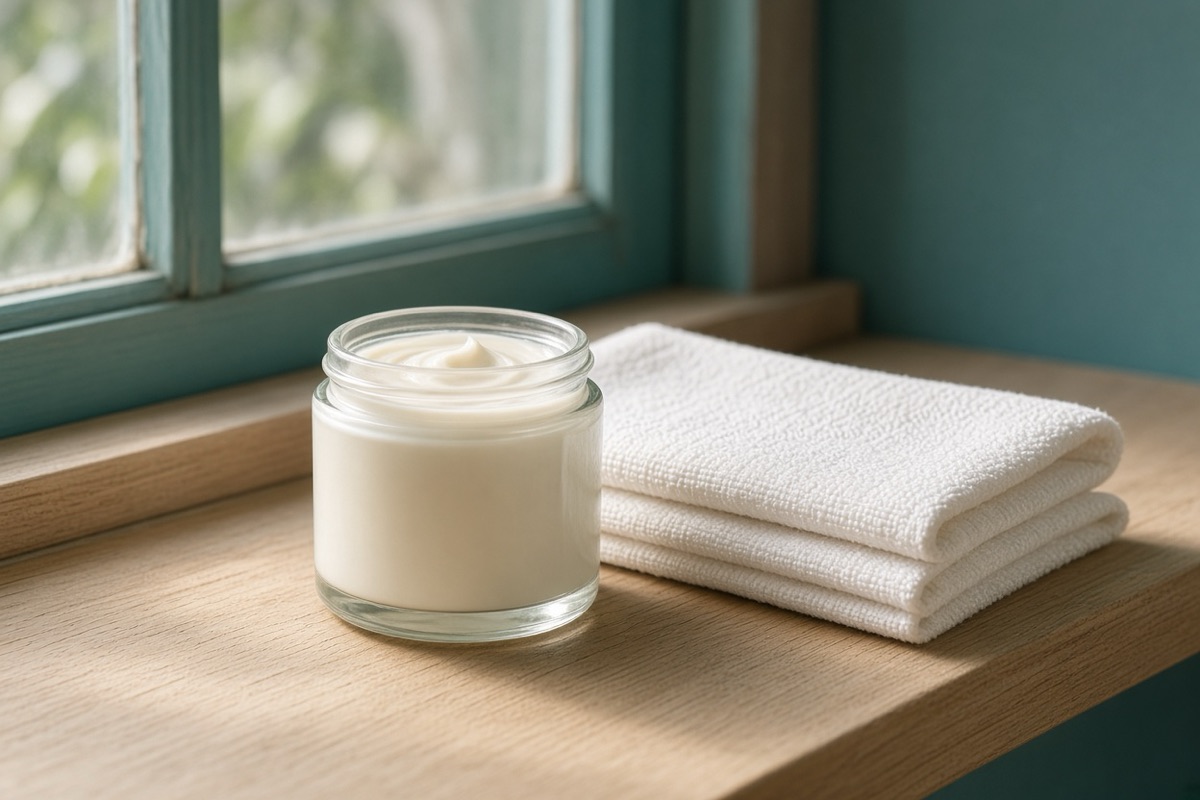
The AAD calls moisturizer a key part of healing dry skin. Its guidance: put it on while skin is still damp after bathing, after each hand wash, and any time the skin feels dry. According to the AAD, creams and ointments add more moisture than lotions. The NHS agrees that lotions are thin and not very moisturizing.
The NHS says ointments suit very dry, thickened skin and night-time use, while creams are less greasy and suit the day. It also says you may need to try a few different emollients to find the one that suits your skin. Our pages on body lotion for dry skin and the best hand cream for dry skin cover labels.
3. Swap soap for a leave-on emollient
The NHS says everyday soaps, shampoos and shower gels usually dry out the skin. For dry or itchy skin, it recommends a leave-on emollient as a soap substitute. These products do not foam like normal soap, but the NHS says they clean just as well. If one stings and the stinging does not settle after rinsing, the NHS suggests asking a pharmacist for a different product.
4. Remove triggers around you
Treatment works better when the cause stops fighting it. The AAD suggests a few changes:
- Choose products labeled “fragrance-free.” The AAD says “unscented” products can still contain chemicals that hide odors and irritate dry skin.
- Skip products with alcohol, fragrance or retinoids on dry skin.
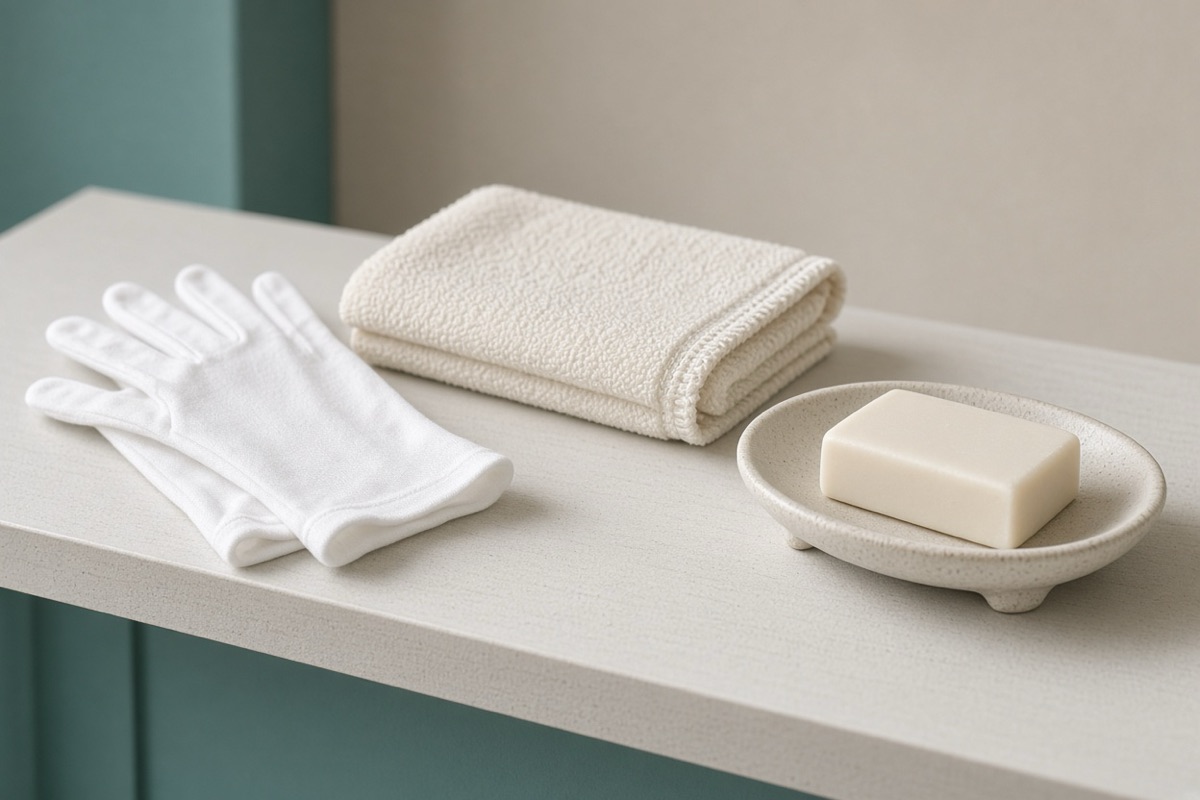
- Wear gloves for dishes and gardening, and loose cotton clothing instead of wool or polyester next to the skin.
- Run a humidifier to add moisture to indoor air, and wash it often so mold cannot grow.
The AAD also asks you to check with a dermatologist before using an anti-itch cream. Many of them contain ingredients that can irritate very dry skin and make the itch worse.
5. Ask a pharmacist or doctor about stronger dry skin treatment
The NHS says you can buy emollients at a pharmacy without a prescription. For a severe skin condition, it suggests speaking with a GP, nurse or health visitor, since stronger treatment may be needed. For small, mildly itchy patches of eczema, the NHS says a pharmacist can give advice. For more severe eczema, it says to see a GP.
Stronger care can include a prescribed product. The AAD says a dermatologist will prescribe or recommend a moisturizer, and that some people need a prescription moisturizer. A medication such as a corticosteroid may be added for a short period. A steroid is a medicine, so questions about using one belong with a doctor or pharmacist.
6. See a dermatologist if dryness stays or keeps returning
The AAD says to see a board-certified dermatologist if dry skin continues after you try its top tips. The dryness may come from an underlying condition. Examples the AAD gives include atopic dermatitis, psoriasis and kidney disease. It adds that treating the condition can bring relief, and that a dermatologist can create a treatment plan for it.
What should you expect when you see a dermatologist?
The AAD says a dermatologist can often diagnose excessively dry skin by looking at it. They will also ask questions so they can build a dry skin treatment plan that fits you. The AAD suggests you be ready to answer these:
- Have you or close relatives had atopic dermatitis, asthma, hay fever or food allergies?
- How long has your skin been this dry?
- What makes it worse?
- Which treatments have you already tried?
The AAD lists three goals for treatment: ease itch, pain and other symptoms; give the skin what it is missing so it can heal; and teach you how to stop the dryness coming back. Your plan may include a moisturizer chosen for you, treatment for any underlying skin condition, and a plan to protect your skin, for example if your job keeps your hands wet.
The AAD says researchers have found that most people see their skin heal when they follow the prescribed plan. If something is hard, such as applying moisturizer as often as needed or protecting your hands at work, tell the dermatologist. As your skin heals, the AAD notes, the plan can be adjusted.
Is dry skin treatment safe? What to know first
Most dry skin treatment is simple, but a few safety points matter.
- Fire risk. The NHS says to keep away from fire, flames and cigarettes when using any emollient, whether paraffin-based or not. Fabric that has soaked up an emollient, such as bandages, clothes or bedding, ignites more readily.
- Slippery floors. The NHS warns that emollients in a bath or shower can make surfaces slippery, and suggests a non-slip mat or towel.
- Clean handling. The NHS suggests scooping from a tub with a clean spoon or spatula to lower the risk of infection.
- Reactions. The NHS says emollients can sometimes cause burning or stinging that does not settle after a few days, blocked or inflamed hair follicles, or facial rashes that aggravate acne. If that happens, it says to talk to a GP, nurse or pharmacist. The AAD likewise asks you to tell your dermatologist if any product, even a moisturizer, burns, stings or irritates.
- Aqueous cream. The NHS says it is no longer recommended as an emollient because an ingredient in it can cause burning, stinging, itching and redness.
- Steroids and other medicines. If you use a steroid cream or another treatment, the NHS says to leave 20 to 30 minutes between it and your emollient, and to ask a doctor which to use first.
Frequently asked questions
Which dry skin treatment works best?
There is no single answer, but both the AAD and the NHS put regular moisturizing first. The AAD favors creams or ointments, applied on damp skin. If that is not enough, a doctor can look for a cause and suggest more.
How soon will dry skin treatment show results?
The AAD says that when self-care works, you tend to see improvement within 2 weeks. If dryness continues or gets worse, it says something other than dry air may be the cause, and a dermatologist can help find it.
Can you cure dry skin for good?
Not always. The AAD says treatment for excessively dry skin can help the skin heal and teaches you how to prevent it returning. Conditions such as eczema are different: the NHS says there is currently no cure for atopic eczema, although treatments can manage it.
Do you need a prescription for dry skin treatment?
Often you do not. The NHS says emollients can be bought without a prescription. A prescription may come into play if the skin is severely dry or linked to a condition, which is where a GP or dermatologist can help.
Can you overuse a moisturizer?
The NHS says emollients are very safe and cannot be overused. It says you can apply them as often as you like, ideally at least three or four times a day. It also advises extra care for the hands and face, which are exposed to the elements more than other areas.
At what point should dry skin be checked by a doctor?
See a doctor if your skin is still dry after you have tried the home steps of dry skin treatment above. The AAD says an untreated condition and the dry skin can both worsen. It also says that without treatment, excessively dry skin carries a greater risk of another skin condition, such as an infection, and that long-term scratching can cause thick, permanently itchy patches.
Get medical advice sooner if:
- the skin is cracked, bleeding or very itchy (the AAD notes that dry skin can flake, itch, crack and even bleed);
- a product burns, stings or irritates, and it does not settle (AAD, NHS);
- you are having cancer treatment and your skin turns dry or thick (the AAD says to see a dermatologist right away);
- eczema becomes blistered, crusty or leaky, or has pus-filled spots, becomes painful, swollen or warm, or you feel generally unwell. The NHS (UK) says to ask for an urgent GP appointment or get help from NHS 111, as this can signal infection. In the US, contact your doctor promptly.
Treat this article as background reading, not a diagnosis.
Sources: AAD, Dry skin: Diagnosis and treatment; AAD, Dermatologists’ top tips for relieving dry skin; AAD, Dry skin overview; NHS, Emollients; NHS, Atopic eczema. All checked 7 October 2026.