

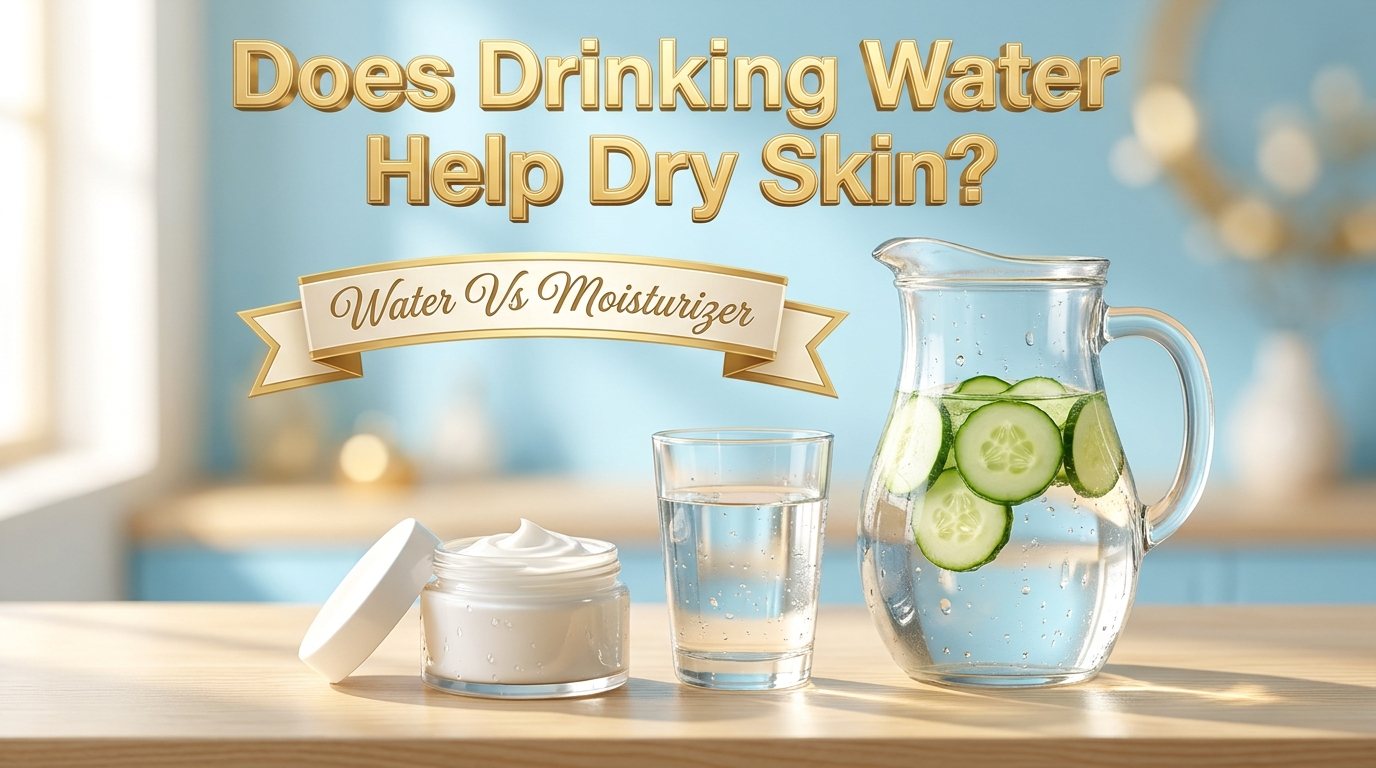
Does drinking water help dry skin? Staying hydrated is a sound habit, but the health sources we read say the skin benefit of drinking water is often overstated. Regular moisturizing and gentle bathing are described as the more effective way to treat dry skin. Drinking more makes the most sense when you are actually dehydrated.
This guide explains the difference, what to do first and when dry skin needs a doctor. Please read it as general information only, not as medical advice.
Table of contents
- Does drinking water help dry skin?
- Why is moisturizing treated as more effective?
- When does drinking water matter for your skin?
- Dry skin or dehydrated skin: which care fits?
- What else helps dry skin besides drinking water?
- What is a realistic expectation?
- Is there a daily water target for dry skin?
- When should you see a doctor about dry skin?
- Does drinking water help dry skin: the short version
Does drinking water help dry skin?
Harvard Health Publishing quotes dermatologist Dr. Rachel Reynolds saying regular fluid intake is a good idea, but the article states that the benefits of skin hydration from drinking water are sometimes overemphasized. External skin care and regular moisturizing are presented as the more effective approach (article dated 1 January 2025).
So water is not harmful or useless, but it is not a proven fix for dry skin on its own. We did not find a source that gives a number of glasses that cures dry skin, and we will not invent one.
Why is moisturizing treated as more effective?
Harvard Health describes moisturizer as a standard way to counter dry skin, and says creams and ointments are better than thinner lotions because they provide more moisture. It advises applying moisturizer to damp skin after patting dry, which helps trap moisture.
The American Academy of Dermatology (AAD) gives the same timing advice and says to moisturize several times a day, especially after bathing and after washing hands (updated 2 January 2026). Our skin care routine for dry skin shows how to fit these steps into a day.
When does drinking water matter for your skin?
When you are dehydrated. Medical News Today defines dehydrated skin as a condition that causes the skin to become dry because of a lack of water, and says it may be eased by drinking more water, possibly with electrolytes, and by using water-based moisturizers (updated 19 September 2023).
It separates this from dry skin, which it describes as a skin type that lacks oil. The two can overlap. Our guide to dry skin vs dehydrated skin explains the signs and a simple pinch test.
Dry skin or dehydrated skin: which care fits?
The table summarizes the advice from the sources.
| Situation | What the sources suggest |
|---|---|
| — | — |
| Skin lacks oil (dry skin) | Moisturizers and emollients; creams or ointments over lotions; apply on damp skin |
| Skin lacks water (dehydrated) | Drink more water, possibly with electrolytes; use water-based moisturizers |
| Dry indoor air | A humidifier, cleaned regularly |
| Frequent hot showers or handwashing | Lukewarm showers and gentle cleansers |
Sources: Medical News Today (updated 19 September 2023); Harvard Health Publishing (1 January 2025); AAD (updated 2 January 2026). Checked 1 November 2026.
What else helps dry skin besides drinking water?
Harvard Health lists lukewarm showers, no more than once a day if possible, moisturizing soaps or liquid cleansers in place of bar soap, and avoiding soap on areas that do not need it, such as the arms and legs. It says heating systems remove humidity from the air, which pulls moisture from skin, so a humidifier helps.
The AAD adds that baths and showers should last five to ten minutes in warm water, that fragrance-free products are best, and that harsh soaps can irritate dry skin. For cracked skin, Harvard Health suggests petroleum jelly covered by cotton gloves or plastic wrap overnight to seal in moisture.
For more everyday ideas, see our dry skin remedies guide.
What is a realistic expectation?
Think of water as support, not the main treatment. Harvard Health lists long, hot showers and frequent handwashing as behaviors that worsen winter skin, so changing those habits may do more for you than adding glasses of water. Be patient with any change in routine, keep it gentle, and watch whether the skin feels less tight and rough over time.
So, does drinking water help dry skin enough to replace a moisturizer? Based on the sources above, no, although it supports overall health.
Is there a daily water target for dry skin?
The sources we read do not give a target amount for dry skin, so we cannot offer one. Harvard Health’s advice is simply that regular fluid intake is a good idea. If you are unsure how much fluid is right for you, ask your doctor, particularly if you have a heart or kidney condition or take medicines that affect fluids.
When should you see a doctor about dry skin?
The AAD says to see a board-certified dermatologist if dry skin persists after trying its tips, because it can signal conditions such as atopic dermatitis, psoriasis or kidney disease. Cleveland Clinic adds that constant itching that disrupts sleep, skin that looks infected, red, warm or swollen, painful skin or a rash are reasons to contact a provider (page last updated 23 June 2022).
Seek medical help for signs of real dehydration, not only skin changes. Dry skin that keeps coming back despite good moisturizing is a good reason to ask. Our dry skin treatment guide explains what general care can do.
Sources: Harvard Health Publishing, “Winter skin woes” (1 January 2025); Medical News Today, “Dehydrated vs. dry skin: Differences and more” (updated 19 September 2023); American Academy of Dermatology, “Dermatologists’ top tips for relieving dry skin” (updated 2 January 2026); Cleveland Clinic, “Dry Skin (Xeroderma)” (last updated 23 June 2022). All checked 1 November 2026.
If you are still asking whether drinking water helps dry skin, remember that the answer depends on whether the skin is dry, dehydrated or both.
Does drinking water help dry skin: the short version
- Drinking water is a good habit, but its skin benefit is sometimes overemphasized.
- Regular moisturizing, ideally on damp skin, is presented as the more effective approach.
- Drinking more matters most if your skin is dehydrated, which is a lack of water, not oil.
- Keep showers lukewarm and short, use a humidifier in dry air, and choose fragrance-free creams or ointments.
- See a doctor if dryness persists, or if skin is cracked, painful, infected or itchy enough to disrupt sleep.
The Dry Skin Tips editorial team prepared this article from the public health sources listed above. It has not been medically reviewed.
Nothing here replaces personal medical advice. If your skin worries you or does not improve, talk to a doctor or dermatologist.