

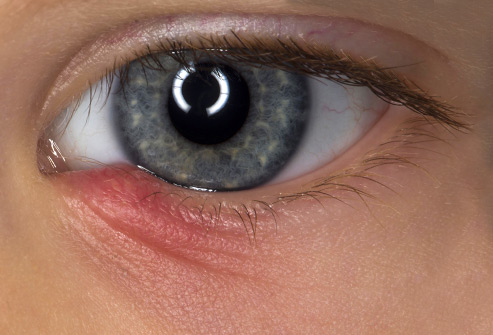
Pain in outer corner of eye can come from a stye, a chalazion, general irritation, or an inflamed tear gland. Some causes settle with warm compresses, while others need treatment. See an eye care professional if the pain is severe, the swelling grows, your vision changes, or it does not go away.
Last updated 3 October 2026. This article draws on guidance published by Cleveland Clinic and the American Academy of Ophthalmology. It is a summary of that material and is no substitute for a visit with your own doctor.
What are the common causes of pain in outer corner of eye?
No single page covers every possible source of pain, so this guide pulls together what the sources say about problems near the outer corner. Cleveland Clinic’s eye irritation page lists allergies, blocked tear ducts, contact lenses, digital eye strain, environmental irritants, foreign objects, infections and styes among the causes of irritated eyes.
The sections below cover the two lid bumps and the tear gland, since those are tied to a specific spot.
Could it be a stye or a chalazion?
Possibly. Cleveland Clinic describes a stye as a painful, discolored bump on the edge of the eyelid. It can appear on the upper or lower lid. Other signs include swelling, discharge, crusting, light sensitivity, soreness, itching, tearing and a scratchy feeling.
A chalazion, the AAO explains, usually does not hurt and forms deeper in the lid than a stye does. Redness and swelling can still show up. When a big one presses against the eyeball, vision may blur.
What is the tear gland, and can it hurt?
Cleveland Clinic says the lacrimal (tear) gland sits behind the upper outside corner of each eye. Inflammation of that gland is called dacryoadenitis. Cleveland Clinic lists its signs as pain, swelling around the upper outside corner of the eye, and discoloration with a feeling of warmth.
The usual cause, it says, is an infection or an autoimmune disease. Treatment follows the cause: antivirals or antibiotics may be used when an infection is behind it. Only a doctor can decide which applies.
What can you do at home?
For a stye or chalazion, the AAO suggests wetting a clean washcloth with hot water and resting it on the lid for 10 to 15 minutes, 3 to 5 times a day. Cleveland Clinic also lists a warm compress, over-the-counter pain relievers and cleaning the lid with gentle soap for a stye.
The AAO warns against squeezing or popping a stye or chalazion, since doing so could push the infection into the eyelid. Cleveland Clinic also warns against covering a stye with makeup, which it says can delay healing.
For general irritation, Cleveland Clinic’s eye irritation page lists rinsing the eye with water and using artificial tears. Contact lens wearers can read our page on dry eyes with contacts. Dry, flaky lids are covered in our guide to dry eyelids.
When should you see a doctor about pain in outer corner of eye?
Cleveland Clinic and the AAO name these reasons to get care:
- Severe pain, sudden loss of vision, or swelling near the eye that is getting worse quickly. Cleveland Clinic’s tear gland page says these call for the emergency room.
- Pain and swelling that do not start getting better after 48 hours, or an eye that swells shut. Cleveland Clinic lists these for styes.
- A stye or chalazion that affects your vision or does not go away. The AAO says it may need to be drained by an ophthalmologist, so it is worth having it checked.
- Pus or blood leaking, blisters, hot eyelids, worsening vision or styes that keep coming back (Cleveland Clinic).
- Eye irritation that is severe and sudden or lasts longer than a few days, or discharge, light sensitivity or severe pain (Cleveland Clinic).
Not sure who to see? Our page on finding a dry eyes specialist covers eye care options.
Frequently asked questions
Is pain in the outer corner of the eye serious?
It can be mild or serious. Cleveland Clinic says severe eye pain, sudden vision loss, or swelling near the eye that worsens quickly needs emergency care. Milder pain with a small lid bump may ease with warm compresses, according to the AAO. If you cannot tell which applies, an eye care professional can check.
Can a stye hurt at the outer corner?
Yes, a stye can be painful. Cleveland Clinic describes it as a painful, discolored bump on the edge of the upper or lower eyelid, though it does not say it favors the outer corner. It lists swelling, soreness, tearing and itching as other signs. Cleveland Clinic says to see a provider if pain and swelling are not improving after 48 hours.
What is the difference between a stye and a chalazion?
The AAO says a stye is very painful and often sits at the eyelid edge, caused by an infected eyelash root. A chalazion is not usually painful and tends to form farther back on the lid. Both can be treated with warm compresses, and neither should be squeezed.
Does an infection of the tear gland need treatment?
Yes, it usually does, and the type depends on the cause. Cleveland Clinic says dacryoadenitis most often comes from an infection or an autoimmune disease. For an infection, it lists antivirals for a virus and antibiotics for bacteria. It advises seeing your eye care specialist as soon as your eyes or vision change.
Sources (all checked 3 October 2026)
- Cleveland Clinic, Dacryoadenitis (Lacrimal Gland Inflammation), updated 2 November 2022.
- Cleveland Clinic, Stye, updated 6 January 2026.
- Cleveland Clinic, Eye Irritation, updated 13 January 2023.
- American Academy of Ophthalmology, Stye vs. Chalazion, published 20 January 2026.
Written by the Dry Skin Tips editorial team. We do not claim medical review of this article. If you have an eye concern, see a qualified health professional.