

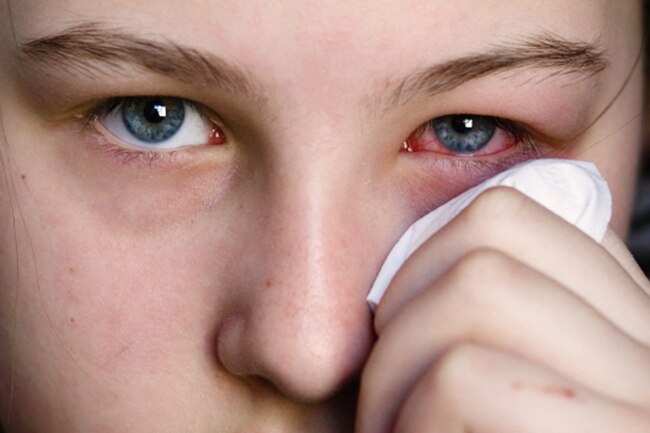
Redness around eyes is often a skin reaction, and plant-based products can cause reactions too. NCCIH says evidence for herbal skin treatments is limited. Cleveland Clinic advises seeing a provider about eyelid dermatitis rather than trying home treatments. Ask a doctor before using any herbal product near the eyes.
Last updated 3 October 2026. This article summarizes guidance from NCCIH, Cleveland Clinic, the American Academy of Dermatology and the American Academy of Ophthalmology. It reports what those sources say and is no substitute for your own doctor’s advice.
What causes redness around eyes?
Cleveland Clinic classes eyelid dermatitis, or eyelid eczema, as a form of contact dermatitis. Signs include a red rash, scaly skin, swelling and itching, and triggers include makeup, fragrances and essential oils. See our guide to what causes redness around the eyes for more.
Cleveland Clinic’s contact dermatitis page says symptoms commonly occur on the lips, eyelids and cheeks.
Is there proof that herbal products treat redness around eyes?
Our sources do not show that herbal products treat redness around the eyes. The National Center for Complementary and Integrative Health (NCCIH) digest cites a 2013 Cochrane review that found no conclusive evidence that oral or topical Chinese herbal medicine reduces eczema severity. It also cites a 2016 review that found some evidence of effects in atopic dermatitis, but says the complexity and risks of these preparations make the area hard for most practitioners to judge. Nothing it reports is specific to the eyelids.
That page is about skin conditions in general, not specifically the eye area, so it cannot tell you whether a particular herb is safe on the eyelids. Where evidence is thin, we cannot recommend any herbal ingredient.
Can plant-based products cause redness around eyes?
Yes. Cleveland Clinic says allergic contact dermatitis can be caused by plants or parts of plants (botanicals), with poison ivy as one example. It also lists skin care products with fragrances and preservatives as triggers. Cleveland Clinic’s eyelid dermatitis page names fragrances and essential oils.
NCCIH gives tea tree oil as an example. It says tea tree oil contains a skin irritant that can bring on irritation or contact dermatitis, and that oxidized oil may set off allergies more readily than fresh oil. “Natural” does not mean free of allergy risk.
How do you test a new product safely?
The American Academy of Dermatology (AAD) describes testing a skin care product on a quarter-sized spot, such as the underside of the arm or the bend of the elbow. The spot is treated twice a day for seven to 10 days. If skin reacts, the page says to wash the product off gently and stop using it.
Note that the AAD page does not address testing on the face or eyes, and eyelid skin is delicate. The AAO also advises adding new eye makeup or eye care products one by one, particularly if your skin reacts readily. Ask a doctor before using anything new near the eyes.
What should you do about redness around eyes right now?
Cleveland Clinic’s eyelid dermatitis page says to see your healthcare provider instead of trying at-home treatments. For prevention, it says to avoid the trigger if you know it, avoid scratching or rubbing the eyelids, touch them with clean hands only, and skip eye makeup while you have eyelid dermatitis.
The page lists corticosteroids as medical treatment, so a provider decides on this. Our guides to rash around the eyes and eczema on eyelids cover related problems.
When should you see a doctor about redness around eyes?
- As soon as you notice eyelid dermatitis symptoms, says Cleveland Clinic.
- If a contact dermatitis rash does not go away in a week with treatment or looks infected (Cleveland Clinic).
- If a product triggers a reaction, stop it. The AAD advises a gentle wash, then keeping the product off your skin, and seeing a dermatologist when the reaction is severe and cool compresses or petroleum jelly bring no relief.
For allergy-prone skin, a provider can also arrange patch testing. Cleveland Clinic says it uses a sticky patch coated in common allergens.
Frequently asked questions
Are herbal products safe for redness around eyes?
The sources we reviewed do not show that they are. NCCIH reports mixed evidence for herbal preparations in eczema generally, with nothing specific to the eyelids, and it notes irritation and allergy risks with tea tree oil. Cleveland Clinic lists botanicals as allergy triggers. Ask a doctor before using any plant-based product near the eyes.
Can natural ingredients cause an allergic reaction?
Yes. Cleveland Clinic says allergic contact dermatitis can be triggered by plants or parts of plants, and its eyelid dermatitis page names fragrances and essential oils among the triggers. NCCIH warns that tea tree oil can irritate skin or lead to contact dermatitis. A product labeled natural can still cause a reaction.
Should I patch test a product before using it on my eyelids?
The AAD describes a spot test on the arm or elbow for seven to 10 days, but its page does not cover the face or eyes. Eyelid skin is delicate, so ask a doctor first. The AAO also says to introduce only one new eye product at a time.
What is the safest first step for redness around the eyes?
Cleveland Clinic recommends seeing your healthcare provider for eyelid dermatitis rather than trying home treatments. Until then, it advises not scratching or rubbing the eyelids, touching them only with clean hands and skipping eye makeup. Stop any product that seems to cause the redness.
Sources (all checked 3 October 2026)
- NCCIH, Skin Conditions and Complementary Health Approaches: What the Science Says, dated August 2021.
- Cleveland Clinic, Eyelid Dermatitis, updated 25 October 2021.
- Cleveland Clinic, Contact Dermatitis, updated 30 March 2023.
- American Academy of Dermatology, How to test skin care products, updated 10 August 2021.
- American Academy of Ophthalmology, How To Use Cosmetics Safely Around Your Eyes, dated 20 August 2024.
Written by the Dry Skin Tips editorial team. We do not claim medical review of this article. If you have a skin concern, see a qualified health professional.