

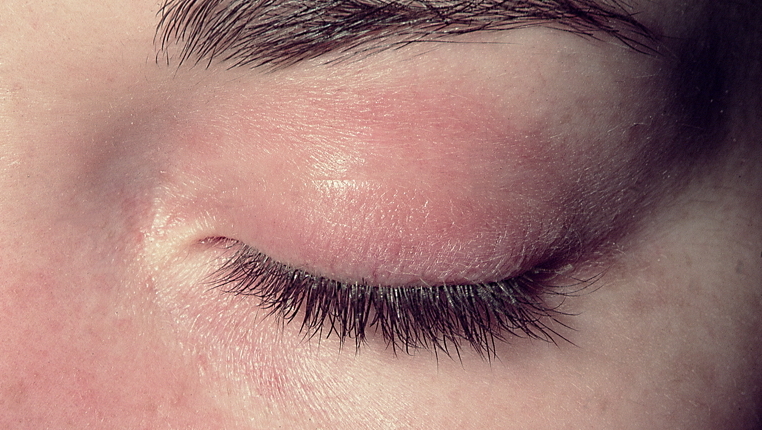
A rash around eyes is often eyelid dermatitis, which is a contact reaction to an irritant or allergen. Eczema, psoriasis and seborrheic dermatitis can also show up there. Avoiding triggers and gentle care help in mild cases. A doctor should look at any rash that lasts, spreads or affects your vision.
Last updated 3 October 2026. This article summarizes guidance from Cleveland Clinic and the American Academy of Dermatology (AAD). It is no substitute for your own doctor’s advice.
What are the common types of rash around eyes?
Three types come up most in the guidance we checked. Only a doctor can tell them apart.
| Eyelid dermatitis | Atopic dermatitis (eczema) | Psoriasis on the eyelids | |
|---|---|---|---|
| What it can look like | Red rash, scaly skin, swelling, blisters | Thickened, discolored skin around the eyes in adults | Swollen, itchy, discolored, scaly patches |
| Itch | Itching is listed as a symptom | Very itchy skin | Cleveland Clinic says eczema is usually itchier |
| What is behind it | An irritant or allergen that touches the skin | Not covered in the pages we checked | Dead skin cells build up and form flaking scales |
Sources: Cleveland Clinic and the AAD, listed below.
What is eyelid dermatitis?
Cleveland Clinic says eyelid dermatitis is also called eyelid eczema, periocular dermatitis or periorbital dermatitis. It is a type of contact dermatitis. The symptoms it lists are a red rash, stinging, scaly skin, burning, swollen skin, pain, itching and blistering.
The condition comes in irritant and allergic forms. Cleveland Clinic says irritant contact dermatitis makes up about 80% of contact dermatitis cases. Our page on eyelid eczema goes into this in more depth.
What triggers eyelid dermatitis?
Cleveland Clinic lists these triggers for eyelid dermatitis:
- Physical: extreme heat, cold or humidity, rubbing or scratching, and excessively washing your hands with hot water and soap.
- Irritants: dust, cosmetics, soaps, chemicals, metals, wool and certain plants.
- Allergens: moisturizers, antibiotics, sunblock, false lashes, nickel jewelry, eye drops, fragrances, hair dye, pollen and poison ivy, oak or sumac.
If you can link the rash to a new product, that is useful to tell your provider.
Can eczema or psoriasis cause a rash here?
Yes. The AAD says atopic dermatitis begins with very itchy skin that can lead to a rash. It says adults may develop thickened, discolored skin around the eyes. The AAD says frequent eye rubbing can change the shape of the cornea.
Cleveland Clinic says psoriasis on the eyelids can affect the eyelid, the area around it and the eyebrow, and scales can cover the lashes. Cleveland Clinic names seborrheic dermatitis as affecting the eyebrows and creases of the nose, but it does not list the eyelids. Read more about psoriasis around the eyes.
How is an eye-area rash treated?
Cleveland Clinic says providers may prescribe corticosteroid cream, oral corticosteroids or calcineurin inhibitors for eyelid dermatitis. It says to avoid eye makeup during treatment. For psoriasis, it lists gentle cleansing, steroid or tacrolimus ointments, warm compresses and hydrating eye drops.
Prevention tips from Cleveland Clinic include:
- Avoid the triggers you have identified.
- Use products for sensitive skin.
- Avoid scratching.
- Touch the eyelids only with clean hands.
For a full guide, see our page on treating an eyelid rash.
When should you see a doctor about rash around eyes?
Cleveland Clinic advises getting in touch with your provider at the first sign of eyelid dermatitis. For eyelid psoriasis, it suggests a visit when treatment has not helped after a few weeks, when things get worse, or when your vision is affected. Sores that ooze pus, together with swelling and burning, can mean infection and call for prompt care.
The AAD says adults with eczema should see a dermatologist or ophthalmologist if eye symptoms last more than a few days.
Frequently asked questions
Is it always eczema?
No. Cleveland Clinic names eyelid dermatitis, which is a contact reaction, and also describes psoriasis on the eyelids. The AAD describes eczema around the eyes in adults. Because they can look alike, a doctor or dermatologist should confirm the cause before you start any treatment.
Why does the rash itch?
Itching is a listed symptom of eyelid dermatitis, according to Cleveland Clinic. It says eczema is usually itchier than psoriasis. The AAD says atopic dermatitis begins with very itchy skin. Scratching can make the skin worse, so Cleveland Clinic advises against it.
Can makeup cause an eyelid rash?
It can. Cleveland Clinic lists cosmetics among irritants and false lashes, fragrances and hair dye among allergens for eyelid dermatitis. It also says to avoid eye makeup while the rash is being treated. If you suspect a product, stop using it and ask your provider.
How fast does eyelid dermatitis heal?
It depends on the type. Cleveland Clinic says irritant contact dermatitis may improve after one to two days of treatment, and allergic contact dermatitis after two to three days. Healing can differ for other causes, such as psoriasis. Contact your provider if the rash does not improve or gets worse.
Sources (all checked 3 October 2026)
- Cleveland Clinic, Eyelid Dermatitis, updated 25 October 2021.
- Cleveland Clinic, Psoriasis on the Eyelids, updated 25 May 2023.
- Cleveland Clinic, Seborrheic Dermatitis, updated 16 July 2025.
- American Academy of Dermatology, Atopic dermatitis symptoms, dated 10 October 2023.
- American Academy of Dermatology, Eye problems associated with adult eczema, page date not shown.
Written by the Dry Skin Tips editorial team. We do not claim medical review of this article. If you have a skin or eye concern, see a qualified health professional.