

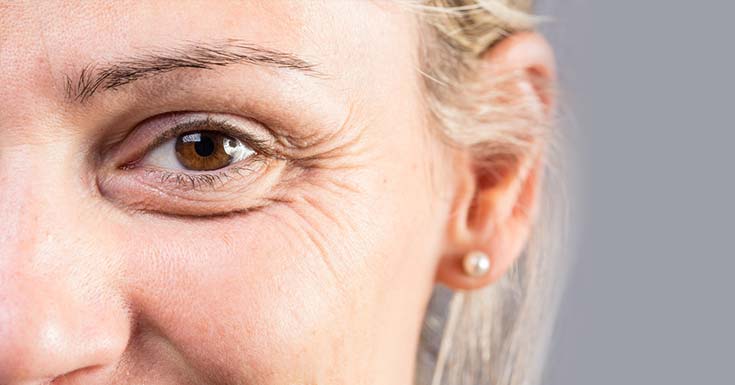
Dry skin under eyes means the thin skin there lacks enough moisture and can look rough, flaky or tight. Common causes include dry air, sun, aging, irritating products and skin conditions such as eczema. Mild dryness often improves with gentle care. See a doctor if you notice swelling or pain, or if the dryness will not settle.
Last updated 3 October 2026. This article summarizes guidance from Cleveland Clinic and the American Academy of Dermatology. It describes what those groups publish and does not replace advice from your own doctor.
What is dry skin under eyes?
Cleveland Clinic defines dry skin as skin that does not have enough moisture to feel soft. Its signs include cracked, rough or tight skin, flaking, scaling and itching. The skin may also look lighter, darker or reddish-purple than nearby skin.
For the eye area, Cleveland Clinic describes dry skin on the eyelids as scaly, itchy or flaky. It is not the same as dry eyes, which come from a lack of tears.
What causes dry skin under eyes?
Cleveland Clinic’s general dry skin page lists age-related drops in oil production, dry or cold climates, health conditions and certain kinds of work. Its eyelid page adds causes that fit the eye area:
- Weather extremes such as cold, heat, wind and sun
- Low humidity
- Smoke and chlorine
- Aging and a natural decline in collagen
- Skin care products
- Allergens such as pollen, dust, metals and cosmetics
The skin itself plays a part. Cleveland Clinic says the skin around the eyelids is some of the thinnest on the body and is always moving. We explain that in dry under eyes.
Could the dryness be eczema?
It can be. Cleveland Clinic lists eyelid dermatitis, atopic dermatitis and psoriasis on the eyelids as medical causes of dry eyelids. Eyelid dermatitis can bring a red rash, stinging, scaly skin, burning, swelling, pain, itching and blistering. Cleveland Clinic says it is a reaction to something your skin touches, and that you should see a provider for it.
Read more in our guides on eczema on the eyelids and redness around the eyes.
What helps mild dryness here?
For mild dryness, Cleveland Clinic’s eyelid care list suggests:
- A gentle, soap-free cleanser made for sensitive skin.
- A humidifier if the air is dry.
- Less time in strong sun, wind and temperature swings.
- A pause on makeup and skin care products.
- A light, hypoallergenic cream with no fragrance.
The AAD’s tips for dry skin add short, warm (not hot) showers and baths, and moisturizer several times a day. Cleveland Clinic’s face tips say to moisturize within five minutes of washing. Neither general page covers the under-eye area specifically. For a day-to-day routine, see our routine guide for dry skin under eyes.
When should you see a doctor?
Call a doctor or dermatologist if:
- You have swelling or a dark circle under just one eye. Cleveland Clinic says to call a provider.
- Puffiness stays for more than a day or two. Cleveland Clinic says that calls for an eye care professional.
- The skin looks infected, hurts or itches all the time. Cleveland Clinic’s dry skin page names constant itching, signs of infection, pain and rash as reasons to call.
- Self-care does not work or other symptoms appear.
- Dryness lingers. The AAD says persistent dry skin may signal a condition such as atopic dermatitis, psoriasis or kidney disease.
For eyelid dermatitis, Cleveland Clinic says to seek emergency care if swelling blocks your vision.
Frequently asked questions
Why is the skin under my eyes dry?
Cleveland Clinic lists weather, low humidity, aging, skin care products and allergens as causes of dry skin on the eyelids. Medical causes include eyelid dermatitis and atopic dermatitis. If gentle care does not help, ask a provider to look at it.
Is this the same as dry eyes?
No. Cleveland Clinic explains that dry eyes come from too few tears, and that problem does not reach the outer side of the eyelids. Dry skin is a skin issue. Gritty or burning eyes are a separate problem that an eye care professional can check.
Should I stop my makeup if the skin is dry?
Cleveland Clinic’s dry eyelid advice includes pausing makeup and skin care products for a while. On its eye bags page, it also suggests removing mascara, eyeshadow or creams with fragrances or dyes if they irritate the area, because they can trigger allergic reactions. Ask your provider when it is safe to restart.
Can this dryness mean a health problem?
Sometimes. The AAD says dry skin that persists after its tips may signal conditions such as atopic dermatitis, psoriasis or kidney disease. That is why it advises seeing a board-certified dermatologist when dryness does not go away. Cleveland Clinic adds that constant itching, signs of infection, pain or a rash are reasons to contact a provider.
Sources (all checked 3 October 2026)
- Cleveland Clinic, Dry Skin (Xeroderma), updated 23 June 2022.
- Cleveland Clinic, Dry Eyelids: Possible Causes, Care and Treatments, updated 13 February 2024.
- Cleveland Clinic, Eyelid Dermatitis, updated 25 October 2021.
- Cleveland Clinic, Dark Circles Under the Eyes, updated 25 May 2022.
- Cleveland Clinic, How To Get Rid of Eye Bags, published 1 May 2026.
- Cleveland Clinic, How To Fix Droopy Eyelids, Circles and Sags, published 1 March 2022.
- Cleveland Clinic, Tips for Getting Rid of Dry Skin on Your Face, reviewed 15 May 2024.
- American Academy of Dermatology, Dermatologists’ top tips for relieving dry skin, updated 2 January 2026.
Written by the Dry Skin Tips editorial team. We do not claim medical review of this article. If you have a skin concern, see a qualified health professional.