

Dry brushing skin means brushing your body with a dry, stiff-bristled brush. It can lift flakes and leave skin temporarily smoother, but claims about detox and cellulite are not supported by evidence, and the brush can irritate dry, inflamed or broken skin. This guide shows what sources say and who should skip it.
Treat this as general guidance, not a substitute for a clinician. If your skin is sore, red or not improving, talk to a doctor or dermatologist first.
Table of contents
- What is dry brushing skin?
- Does dry brushing skin actually work?
- Is dry brushing skin good for dry skin?
- Who should skip dry brushing skin?
- How do you dry brush skin gently?
- How often should you dry brush skin?
- Can you dry brush your face?
- What can you do instead of dry brushing?
- When should you see a doctor?
- Is dry brushing good for your skin overall?
- Dry brushing skin: the short version
What is dry brushing skin?
Cleveland Clinic describes it as a daily body massage with a dry brush that has stiff bristles (published November 2021). Healthline says it comes from an Ayurvedic practice called gharshana that has been used for centuries (updated May 2026).
People usually brush before a shower, then moisturize. The aim is to remove loose, flaky skin from the surface.
Does dry brushing skin actually work?
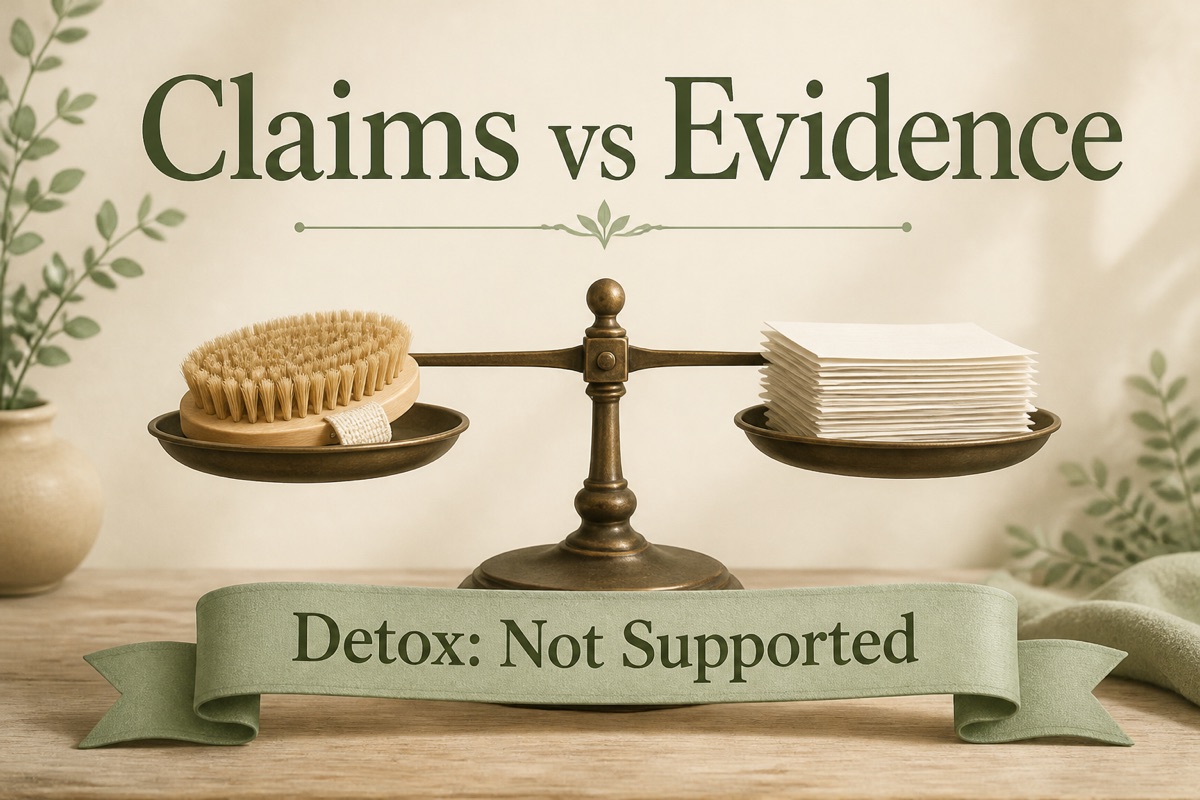
Does dry brushing work? Partly. A Cleveland Clinic dermatologist says some of the claims are true, but not all of them. The table sorts the common claims by what the two sources say.
| Claim | What the sources say | Our reading |
|---|---|---|
| Smoother, brighter skin | Removing dead skin cells can leave skin temporarily smoother and brighter (Cleveland Clinic); bristles remove dead skin cells (Healthline) | Plausible, short-lived |
| Better lymph flow | The dermatologist says it may promote lymph flow, but the article gives no evidence (Cleveland Clinic) | Unproven |
| Detox | Healthline says there is little research to support it; Cleveland Clinic gives no evidence | Not supported |
| Less cellulite | No scientific evidence (Cleveland Clinic); no scientific data, not a recognized treatment by most doctors (Healthline) | Not supported |
Sources: Cleveland Clinic, “The Truth About Dry Brushing and What It Does for You” (published 2 November 2021, no review date shown); Healthline, “Dry Brushing” (medically reviewed, updated 15 May 2026). Both checked 25 October 2026.
Cleveland Clinic adds that any look of smaller cellulite after brushing is likely a temporary plumping of the skin from extra blood flow.
Is dry brushing skin good for dry skin?
It can help with flakes, but dry skin is also easy to irritate. The American Academy of Dermatology (AAD) says that toweling off extremely dry skin roughly can cause irritation. A stiff brush is rougher than a towel, which is our reason to go gently, not a finding from the AAD.
The AAD recommends applying moisturizer to skin that is still damp from washing. Cleveland Clinic also says to apply lotion after you brush. Our skin care routine for dry skin shows how to fit that in.
Who should skip dry brushing skin?
Skip it, or ask a doctor first, in these cases:
- Broken skin, such as cuts, sores or sunburn (Cleveland Clinic and Healthline).
- Areas that are infected, red or inflamed, or that have cellulitis or skin cancer (Cleveland Clinic).
- Moles, warts or raised bumps. Cleveland Clinic says never to brush over them.
- Eczema or psoriasis. Healthline says to avoid brushing inflamed areas.
- Sensitive skin. Healthline advises talking to your doctor, and Cleveland Clinic says a dry washcloth can replace the brush.
Stop right away if your skin becomes red, swollen or irritated, according to Cleveland Clinic. If you have an itchy, flaky rash, read our guide to a dry skin rash instead.
How do you dry brush skin gently?
Use these steps, taken from Cleveland Clinic and Healthline:

- Pick a natural-fiber brush with a long handle so you can reach your back (Healthline).
- Brush on dry skin just before you shower (Cleveland Clinic).
- Start at your feet or ankles and use long strokes up each leg and arm. Use circles on your torso and back (Cleveland Clinic).
- Press lightly on your abdomen, breasts and neck (Cleveland Clinic).
- Each area needs only a handful of overlapping passes. Over-brushing can cause irritation or bleeding (Cleveland Clinic).
- Start gently and add pressure only as your skin adjusts (Healthline).
- Shower, then moisturize.
How often should you dry brush skin?
The sources do not fully agree. Cleveland Clinic describes brushing once a day, while Healthline gives no recommended number. The AAD’s dry skin tips page does not mention dry brushing. With dry skin, starting with fewer sessions and watching how your skin responds is the careful choice, and any redness means stopping.
Can you dry brush your face?
Cleveland Clinic says to avoid dry brushing the face and use gentler methods made for facial skin. Healthline says not to brush the face unless you use a softer brush made for it.
What can you do instead of dry brushing?
If your skin is sensitive, Cleveland Clinic says a dry washcloth can replace the brush. Daily care matters more for dry skin: short warm showers and a fragrance-free cream on damp skin, as the AAD advises. See our dry skin remedies for gentle habits.
When should you see a doctor?
See a doctor or dermatologist if your skin stays red, swollen or irritated after brushing, if flaky patches do not go away, or if you have a skin condition or any concern before you start. Cleveland Clinic advises consulting a dermatologist with concerns. Our guide to dry skin treatment explains what ordinary care can do.
Is dry brushing good for your skin overall?
It can leave skin smoother for a short time by removing flakes, which is the best-supported benefit. Claims about detox and cellulite lack evidence, and brushing can irritate dry, inflamed or broken skin. For many people with dry skin, gentle moisturizing is the safer foundation.
Dry brushing skin: the short version
- The best-supported effect is temporary smoothing from removing flakes.
- The detox and cellulite claims lack support.
- Skip it on broken, inflamed, infected or sensitive skin, and over moles, warts or raised bumps.
- Use a natural brush, light pressure and long strokes, then moisturize.
- Keep it off your face unless you use a softer brush made for it.
- Stop if your skin turns red, swollen or irritated, and ask a doctor if unsure.
Written by the Dry Skin Tips editorial team from the sources named above. We do not claim medical review of this article.
This guide is no substitute for personal medical advice. If your skin worries you or does not improve, talk to a doctor or dermatologist.