

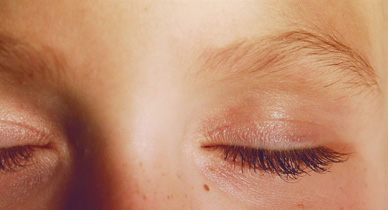
Psoriasis around eyes causes scaly, itchy, swollen patches on or near the eyelids. Cleveland Clinic calls it very rare, and the thin, sensitive skin makes treatment tricky. Gentle cleaning, a moisturizer and a warm compress are listed for mild cases, while any medicine used near the eye needs a doctor’s guidance.
Last updated 3 October 2026. This article draws on guidance published by Cleveland Clinic and the NHS. It is a summary of that material and is no substitute for a visit with your own doctor.
What does psoriasis around eyes look like?
According to Cleveland Clinic, an eyelid outbreak appears as a patch of swollen, itchy, discolored, scaly skin. Dry or flaky skin, pain or discomfort, and swelling are on its symptom list, as is vision impairment.
Cleveland Clinic says psoriasis on the eyelids and around the eyes is very rare. Facial psoriasis can occur in people who have a psoriasis diagnosis. For facial psoriasis in general, it describes thick, scaly patches that range from pink to red, red to purple, or brown to silver, depending on skin tone.
Is it psoriasis or eyelid eczema?
The two can look alike. Cleveland Clinic explains that psoriasis involves a buildup of dead skin cells that scale and flake. Eczema on the eyelid happens after an irritant or allergen touches the skin and causes an itchy rash.
Both can itch. Cleveland Clinic says eczema is usually itchier than psoriasis. Because the signs overlap, a doctor has to tell them apart. Our page on eczema on eyelids covers the other condition.
What causes psoriasis on the eyelids?
Cleveland Clinic says the immune system targets healthy skin cells and speeds up cell growth, so dead skin cells build up.
What care helps psoriasis around eyes?
These are the options Cleveland Clinic names for the eyelids:
- Washing the area with a soap or cleanser made for sensitive skin, such as baby shampoo.
- Applying a moisturizer, cream or ointment.
- A warm compress, never a hot one, when the lid feels sore or looks swollen.
- Topical medications, such as corticosteroid creams or tacrolimus ointment, applied to the eyelid. Cleveland Clinic says a provider prescribes a medicated treatment for severe symptoms.
For facial psoriasis, Cleveland Clinic explains that facial skin is thinner and more sensitive than skin elsewhere. A treatment that works on the arms and legs might not work as well on the face. It also names other treatments, including topical creams, light therapy and, for severe cases, injected medicines.
The NHS lists moisturizing products (emollients) as a core part of psoriasis care, along with vitamin D and steroid creams, and says a GP can prescribe some treatments. Its page does not give specific advice for the eye area.
Why should you be careful with creams near the eyes?
Cleveland Clinic warns that overuse or improper application of topical medicine around or on the eyelid can be dangerous to eyesight. It names dry eye, cataracts and glaucoma as possible harms.
That is why this article does not suggest any cream. Do not put a steroid or other medicine near your eyes unless a doctor has told you how. Dry, flaky lids without a psoriasis diagnosis are covered in our guide to dry eyelids.
When should you see a doctor about psoriasis around eyes?
Cleveland Clinic says to contact a provider if:
- Symptoms do not improve with treatment after a few weeks, get worse or affect your ability to see.
- For facial psoriasis: pain, swelling or pus leaking out, skin that is not healing a couple of months after starting treatment, or repeated outbreaks on the face.
If you have never been diagnosed, see a doctor first rather than guessing. See also our guide to a rash around the eyes.
Frequently asked questions
Is psoriasis around the eyes common?
No. Cleveland Clinic says psoriasis on the eyelids and around the eyes is very rare. Psoriasis on the face as a whole can occur in people who already have a psoriasis diagnosis. If you have scaly patches near your eyes, a doctor can check whether psoriasis or another condition is the cause.
Can I treat psoriasis around my eyes at home?
Mild cases can be, in part. Cleveland Clinic describes washing with a gentle cleanser, adding a moisturizer, and using a warm compress if the lid is sore or swollen. It also warns that overusing medicated creams near the eye carries risks. Ask a doctor before putting any medicine on the eyelid.
How is eyelid psoriasis different from eczema?
Cleveland Clinic says psoriasis is a buildup of dead skin cells that scale and flake, while eczema is an itchy rash after an irritant or allergen touches the lid. Eczema is usually itchier. Since they can look alike, only a doctor can tell which one you have.
Can psoriasis near the eyes affect vision?
It may. Cleveland Clinic lists vision impairment among the symptoms and says to contact a provider if the condition affects your ability to see. It also warns that misusing topical medicine near the eye can harm eyesight. Any vision change is a reason to see an eye care professional promptly.
Sources (all checked 3 October 2026)
- Cleveland Clinic, Psoriasis on the Eyelids, updated 25 May 2023.
- Cleveland Clinic, Psoriasis on the Face, updated 2 June 2023.
- NHS, Psoriasis: Treatment, reviewed 10 March 2026.
Written by the Dry Skin Tips editorial team. We do not claim medical review of this article. If you have a skin concern, see a qualified health professional.