

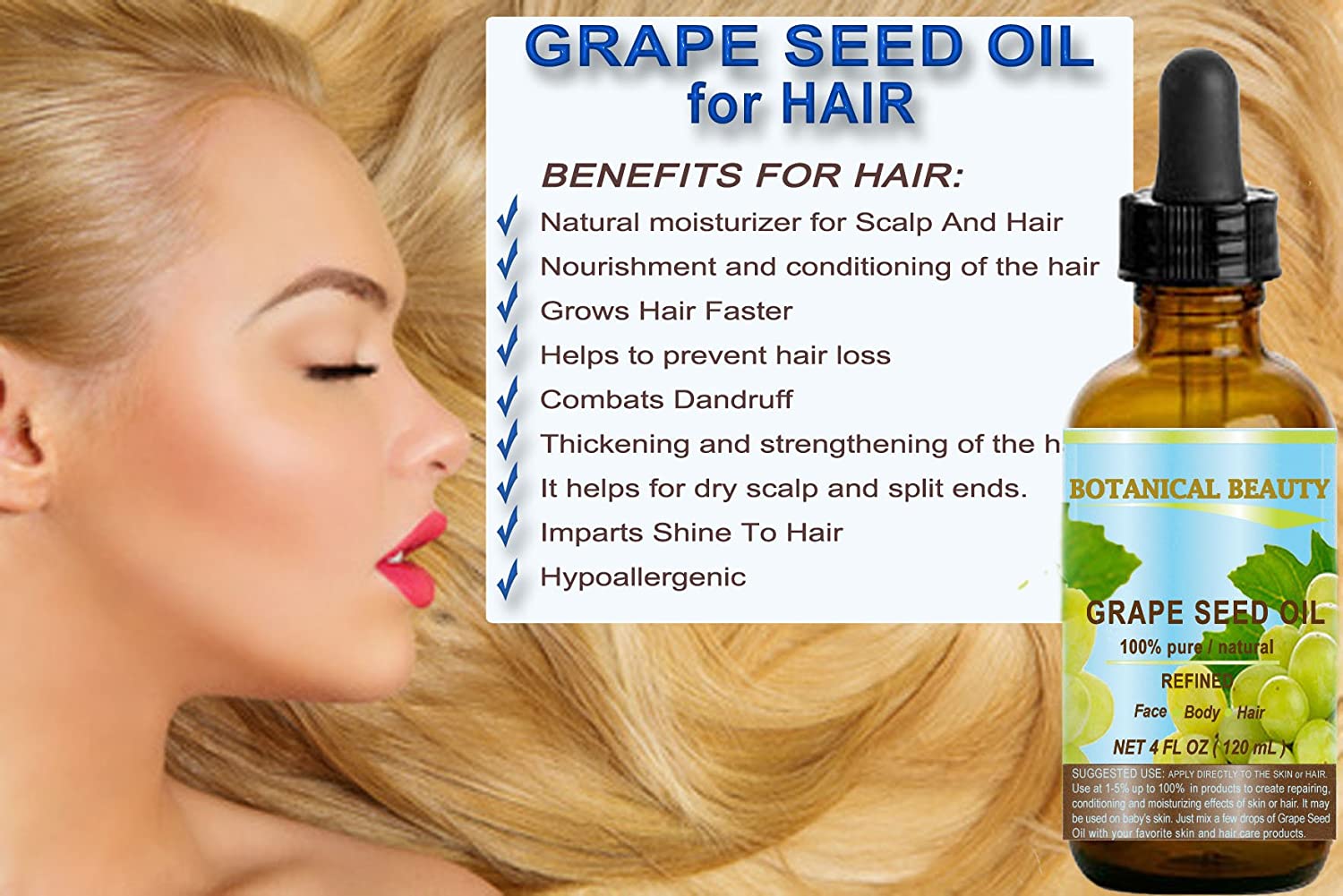
Grapeseed oil benefits for hair are still poorly documented. A 2025 lab study on a fermented version found it helped damaged hair samples, but that is not the same as the oil on a store shelf. Dermatology sources say hair oils suit some hair types better than others, and most advise keeping them off the scalp.
Last updated 3 October 2026. This article summarizes a published study and guidance from Cleveland Clinic and the American Academy of Dermatology. It is background reading, and a dermatologist can advise on your own hair and scalp.
What does research say about grapeseed oil benefits for hair?
The best-known study we found is a 2025 paper in Scientific Reports. It tested a fermented grapeseed oil on chemically damaged human hair samples in the lab. The authors report that the oil strengthened damaged hair by forming hydrogen bonds with keratin and preserving lipids and moisture.
There are limits. The work was done in the lab, not on people using it at home. It also used a fermented oil, not plain grapeseed oil. So it cannot tell you which grapeseed oil benefits for hair you would get from a bottle of ordinary oil.
Do hair oils work in general?
Cleveland Clinic’s article on hair oiling credits oils with a moisture boost and a shinier look. It says oils applied to the ends can hide the look of split ends for a while, but that this is not a permanent fix.
The article names argan, coconut, sesame and almond oils as examples. Grapeseed oil is not on that list, so we cannot say Cleveland Clinic recommends it. The same article notes that results vary with natural oiliness, styling history, age and ethnicity.
Who might benefit, and who might not?
Cleveland Clinic says oiling is most likely to benefit dry, coarse hair with tight curls. Fine, straight hair, by contrast, can end up weighed down.
The article also tells people who get dandruff to skip oils, since oiling can raise the risk of seborrheic dermatitis. In its argan oil article, Cleveland Clinic gives a similar warning about the scalp, especially for oily hair types.
How do you use hair oil more safely?
Based on the guidance we read:
-
Keep it off the scalp. Cleveland Clinic suggests applying oil to the ends only.
-
Start small. It suggests a pea-sized amount on dry hair.
-
Match it to your hair. The American Academy of Dermatology (AAD) advises picking hair products that suit your hair type. It adds that flakes can appear when the conditioner, oil or scalp moisturizer is wrong for your hair.
-
Spot test. For a new product, the AAD describes a small test patch, such as inside the elbow, used morning and night for up to 10 days. Watch for redness, itching or swelling.
-
Choose fragrance-free if your skin is sensitive. Cleveland Clinic’s argan oil article says oils for dry, sensitive skin should be free of added fragrance and preservatives, which can aggravate eczema.
To weigh grapeseed oil benefits for hair against other oils, read our guides to jojoba oil benefits for hair, carrier oils for hair and sunflower oil for hair. Our page on sweet almond oil for skin and hair covers another common choice.
What else protects dry or damaged hair?
Oil is only one piece. The AAD’s healthy hair tips say conditioner moisturizes and detangles. For dry, textured, curly or thick hair, it says washing as needed is fine, as long as it happens at least every two to three weeks.
The AAD also says heat can damage hair. It suggests cutting back on blow-drying and hot tools, choosing low or medium heat, and adding a heat protectant. Wet hair is easier to damage, so use a wide-tooth comb rather than a brush.
When should you see a doctor about hair or scalp problems?
Hair and scalp problems are worth a dermatologist’s attention. As our own advice, see a board-certified dermatologist if you have flaking that keeps coming back, an itchy or sore scalp, or a rash after using an oil. Cleveland Clinic also links oiling with a higher risk of seborrheic dermatitis in people prone to dandruff, so stop and ask for advice if your scalp gets worse.
Frequently asked questions
Can grapeseed oil make hair stronger?
One 2025 lab study found a fermented grapeseed oil strengthened chemically damaged hair samples. That was not a study of people, and it was not plain oil. The sources we read do not show that regular grapeseed oil strengthens hair at home, so treat claims of that kind with care.
Is grapeseed oil good for all hair types?
Not necessarily. Cleveland Clinic links the benefits of oiling to dry, coarse, tightly curled hair, while fine, straight hair can feel heavy with oil. It also says people who get dandruff should avoid oils. The sources do not rate grapeseed oil for each hair type, so your own hair’s reaction is the guide.
Should I put oil on my scalp?
Cleveland Clinic advises against it, though it acknowledges that some studies support scalp use. Its argan oil article warns that oil on the scalp may promote seborrheic dermatitis, especially in oily hair types. The article describes putting a small amount on dry ends only.
How do I know if I am allergic to a hair oil?
The AAD recommends a small test patch on the skin, repeated twice daily for up to 10 days. Red, itchy or swollen skin is a sign of a reaction. If that happens, the AAD says to wash the product off and not use it again.
Sources (all checked 3 October 2026)
-
Scientific Reports via PubMed Central, Fermented grapeseed oil repairs chemically damaged hair via enhanced permeability mechanisms, 2025.
-
Cleveland Clinic, Hair Oiling: 3 Benefits and How To Do It, published 31 August 2022.
-
Cleveland Clinic, 5 Skin and Hair Benefits of Argan Oil, published 1 August 2022.
-
American Academy of Dermatology, Tips for healthy hair, updated 12 August 2024.
-
American Academy of Dermatology, How to test skin care products, updated 10 August 2021.
Written by the Dry Skin Tips editorial team. We do not claim medical review of this article. If you have a skin or scalp concern, see a qualified health professional.